Thesis Report: Leachate Treatment Efficiency at Amin Bazar & Matuail Landfills | PDF Download
The effectiveness of cotreating leachate in municipal treatment facilities has come under scrutiny in light of the stricter regulations imposed on wastewater discharge in recent years.
In order to lessen the environmental impact associated with municipal solid waste landfills, landfill treatment for leachate is required. The study was conducted on the efficiency of leachate treatment facility situated at Matuail and Amin bazar landfills based on two parameters which are heavy metal and micro-plastics.
In short, to increase the efficiency of the two leachate treatment facility at Matuail and Amin bazar landfills the methods for removing micro-plastics and heavy metals have been discussed.
Background of the Thesis Report
The disposal of non-segregated solid waste at landfill sites is a commonly observed waste management technique in poor nations, such as Bangladesh. During the activity of waste disposal, solid waste undergoes gradual and oxygen deprived decomposition, lasting around 30 to 50 years.
Also, There is a risk that these materials may permeate from the landfill site into underground aquifers thereby polluting crucial urban water resources. Landfill leachate is collected of a diverse array of essences including substantial amounts of refractory organics, tiny organic molecules, toxic heavy metals, inorganic minerals, and organic residual contaminants, which exhibit different concentrations.
| Report Title : | Leachate Treatment Efficiency at Amin bazar & Matuail Landfills. |
| Total Page : | 98 |
There are numerous reasons that may contribute to the presence of heavy metals in leachate from landfills. Around 2.8 million metric tons of electrical garbage, which holds hazardous natures such as mercury (Hg) and lead (Pd), are annually generated and then disposed of in landfills, agricultural areas, and bodies of water.
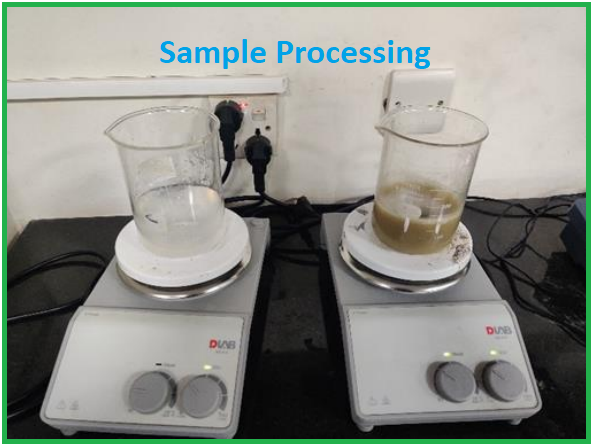
Problem Statement of the Thesis Report
At present, The waste management system in Dhaka is now facing challenges in effectively managing a substantial amount of garbage, estimated to be over 4500 tons per day. At present, the Dhaka South City Corporation (DSCC) and Dhaka North City Corporation (DNCC) are served by two landfills located at Matuail and Amin bazar, respectively. The effectiveness of a treatment facility may be assessed by conducting a comparative analysis of heavy metal and micro-plastic concentrations in both raw and treated 20 leachate. The purpose of this study is to provide a comprehensive explanation and justification for the chosen research approach and methodology.
Outline of the Thesis Report
Introduction
Background of the study, Problem Research gap, Rationale of the study, Research hypothesis, Research Question, Research Objectives, Broad Objective: Specific objective, Outline of the Thesis,
Literature review
Landfill, The waste management approach used in Bangladesh, The potential hazards linked to landfill sites, Leachate and Leachate Treatment Plant: Micro-plastic type, Primary Micro-plastic, Secondary Microplastic, The sources of micro-plastics, Run-off from land-based sources,
Wastewater, Micro-plastic pollution, Risk to aquatic organism due to micro-plastic, Heavy metal presence and source at landfills, Heavy metal pollution in environment from landfill leachate, Health risk associated with heavy metal, Definition of terms.
Materials and methods
Study area, Research Design, Data Collection Sources, Materials and instruments: Sampling technique, Elemental analysis, Micro-plastic digestion, Heavy metal digestion, Quality control, Analysis of physiochemical parameters of leachate, Indices for heavy metal assessment and significance analysis, Statistical Analysis,
Results and Discussion
Analysis of physiochemical parameters, Quantification of micro-plastic particles, Morphological observation of micro-plastic particles, Color variation of micro-plastic particles, Size variation of micro-plastic particles,
Heavy metal concentration in landfill leachates of Bangladesh, Heavy metal pollution Index, Correlation, Statistical comparison between raw and treated leachate, Micro-plastic removal approaches, Heavy metal removal approaches,
Conclusion & References
Research Objectives
Broad objective
Landfill leachate is a significant source of micro-plastic and heavy metals. The leachate treatment plants’ efficiency can be measured through these two parameters in both raw and treated leachate.
Specific objectives
- To assess the micro-plastic amount in raw and treated leachate.
- To evaluate heavy metal in raw and treated leachate.
Research questions
- How much micro-plastic is present in raw and treated leachate?
- Is the heavy metal concentrations in treated leachate below the permissible limit set by the Government?
- What is the concentration of heavy metals content in raw and treated leachate?
- Is the amount of micro-plastic substantially low in treated leachate than raw?
Key Analytical Highlights
Research focus
The study analyzes the effectiveness of the Locate Treatment Plant of Amin Bazar and Matuail Landfills.
Mainly tested material:
- Micro-plastic
- Heavy Metals (HG, PB, CD, etc.)
Problem Statement
- The city of Dhaka produces more than 4.5+ tons of waste daily.
- Leachate, which is released from the landfill, contains toxic heavy metals and micro-plastic, which at risk of underground water and the environment.
Methodology
- Elementary Analysis for Sample Collection and Heavy Metal Measurement.
- Micro-plastic detection diagnosis and morphological studies (size, color, type).
- Statistical Comparison: Raw leachate vs. Treated leachate.
Key findings
- Micro-Plastics: Raw leachates are present in high levels, partially removed in treatment.
- Heavy Metals: In some cases, after purification, there is an acceptable limit.
- Efficiency deficit: Existing technology is not fully effective, advanced technology is needed.
Environmental Risks
- Untreated leachate can contaminate underground water sources and city water resources.
- In the long run it creates a serious risk for human health and aquatic life.
Recommendations
- Use of advanced treatment technology (eg: Membrane filtration, adsorption).
- Regular heavy metal and micro-plastic observations.
- Controls in waste drainage by applying strict policies and laws.
Relevance for Students & Researchers
- Effective as a reference to environmental engineering, waste management and public health research.
- GIS gives practical examples of Lab Analysis and Statistical Tools.
Conclusion
Physical, chemical characterization as well as the concentration of heavy metals and micro-plastics was analyzed in raw and treated leachate to determine the effect of leachate on surrounding water bodies.
Generally, This study has been conducted focusing on the efficiency of leachate treatment facility of Matuail and Amin bazar landfills through measuring the removal rate of micro-plastic and heavy metals in leachate.
In short, To remove micro-plastics and heavy metals various methods were gathered from list of papers that mentioned significant removal rates of micro-plastic and heavy metals to increase the efficiency of leachate treatment facilities.
Read Paper Online
Click "View PDF" to open the full document below.
Frequently asked questions (FAQS)
Background of the Thesis Report
The disposal of non-segregated solid waste at landfill sites is a commonly observed waste management technique in poor nations, such as Bangladesh. During the activity of waste disposal, solid waste undergoes gradual and oxygen deprived decomposition, lasting around 30 to 50 years.
Also, There is a risk that these materials may permeate from the landfill site into underground aquifers thereby polluting crucial urban water resources. Landfill leachate is collected of a diverse array of essences including substantial amounts of refractory organics, tiny organic molecules, toxic heavy metals, inorganic minerals, and organic residual contaminants, which exhibit different concentrations.
| Report Title : | Leachate Treatment Efficiency at Amin bazar & Matuail Landfills. |
| Total Page : | 98 |
There are numerous reasons that may contribute to the presence of heavy metals in leachate from landfills. Around 2.8 million metric tons of electrical garbage, which holds hazardous natures such as mercury (Hg) and lead (Pd), are annually generated and then disposed of in landfills, agricultural areas, and bodies of water.
Problem Statement of the Thesis Report
At present, The waste management system in Dhaka is now facing challenges in effectively managing a substantial amount of garbage, estimated to be over 4500 tons per day. At present, the Dhaka South City Corporation (DSCC) and Dhaka North City Corporation (DNCC) are served by two landfills located at Matuail and Amin bazar, respectively. The effectiveness of a treatment facility may be assessed by conducting a comparative analysis of heavy metal and micro-plastic concentrations in both raw and treated 20 leachate. The purpose of this study is to provide a comprehensive explanation and justification for the chosen research approach and methodology.
Outline of the Thesis Report
Introduction
Background of the study, Problem Research gap, Rationale of the study, Research hypothesis, Research Question, Research Objectives, Broad Objective: Specific objective, Outline of the Thesis,
Literature review
Landfill, The waste management approach used in Bangladesh, The potential hazards linked to landfill sites, Leachate and Leachate Treatment Plant: Micro-plastic type, Primary Micro-plastic, Secondary Microplastic, The sources of micro-plastics, Run-off from land-based sources,
Wastewater, Micro-plastic pollution, Risk to aquatic organism due to micro-plastic, Heavy metal presence and source at landfills, Heavy metal pollution in environment from landfill leachate, Health risk associated with heavy metal, Definition of terms.
Materials and methods
Study area, Research Design, Data Collection Sources, Materials and instruments: Sampling technique, Elemental analysis, Micro-plastic digestion, Heavy metal digestion, Quality control, Analysis of physiochemical parameters of leachate, Indices for heavy metal assessment and significance analysis, Statistical Analysis,
Results and Discussion
Analysis of physiochemical parameters, Quantification of micro-plastic particles, Morphological observation of micro-plastic particles, Color variation of micro-plastic particles, Size variation of micro-plastic particles,
Heavy metal concentration in landfill leachates of Bangladesh, Heavy metal pollution Index, Correlation, Statistical comparison between raw and treated leachate, Micro-plastic removal approaches, Heavy metal removal approaches,
Conclusion & References
Research Objectives
Broad objective
Landfill leachate is a significant source of micro-plastic and heavy metals. The leachate treatment plants’ efficiency can be measured through these two parameters in both raw and treated leachate.
Specific objectives
- To assess the micro-plastic amount in raw and treated leachate.
- To evaluate heavy metal in raw and treated leachate.
Research questions
- How much micro-plastic is present in raw and treated leachate?
- Is the heavy metal concentrations in treated leachate below the permissible limit set by the Government?
- What is the concentration of heavy metals content in raw and treated leachate?
- Is the amount of micro-plastic substantially low in treated leachate than raw?
Key Analytical Highlights
Research focus
The study analyzes the effectiveness of the Locate Treatment Plant of Amin Bazar and Matuail Landfills.
Mainly tested material:
- Micro-plastic
- Heavy Metals (HG, PB, CD, etc.)
Problem Statement
- The city of Dhaka produces more than 4.5+ tons of waste daily.
- Leachate, which is released from the landfill, contains toxic heavy metals and micro-plastic, which at risk of underground water and the environment.
Methodology
- Elementary Analysis for Sample Collection and Heavy Metal Measurement.
- Micro-plastic detection diagnosis and morphological studies (size, color, type).
- Statistical Comparison: Raw leachate vs. Treated leachate.
Key findings
- Micro-Plastics: Raw leachates are present in high levels, partially removed in treatment.
- Heavy Metals: In some cases, after purification, there is an acceptable limit.
- Efficiency deficit: Existing technology is not fully effective, advanced technology is needed.
Environmental Risks
- Untreated leachate can contaminate underground water sources and city water resources.
- In the long run it creates a serious risk for human health and aquatic life.
Recommendations
- Use of advanced treatment technology (eg: Membrane filtration, adsorption).
- Regular heavy metal and micro-plastic observations.
- Controls in waste drainage by applying strict policies and laws.
Relevance for Students & Researchers
- Effective as a reference to environmental engineering, waste management and public health research.
- GIS gives practical examples of Lab Analysis and Statistical Tools.
Conclusion
Physical, chemical characterization as well as the concentration of heavy metals and micro-plastics was analyzed in raw and treated leachate to determine the effect of leachate on surrounding water bodies.
Generally, This study has been conducted focusing on the efficiency of leachate treatment facility of Matuail and Amin bazar landfills through measuring the removal rate of micro-plastic and heavy metals in leachate.
In short, To remove micro-plastics and heavy metals various methods were gathered from list of papers that mentioned significant removal rates of micro-plastic and heavy metals to increase the efficiency of leachate treatment facilities.
Read Paper Online
Click "View PDF" to open the full document below.
Frequently asked questions (FAQS)
Download the Full Paper (PDF)
Free to read online & offline
 Thesis Paper
 Thesis Paper
 Thesis Paper